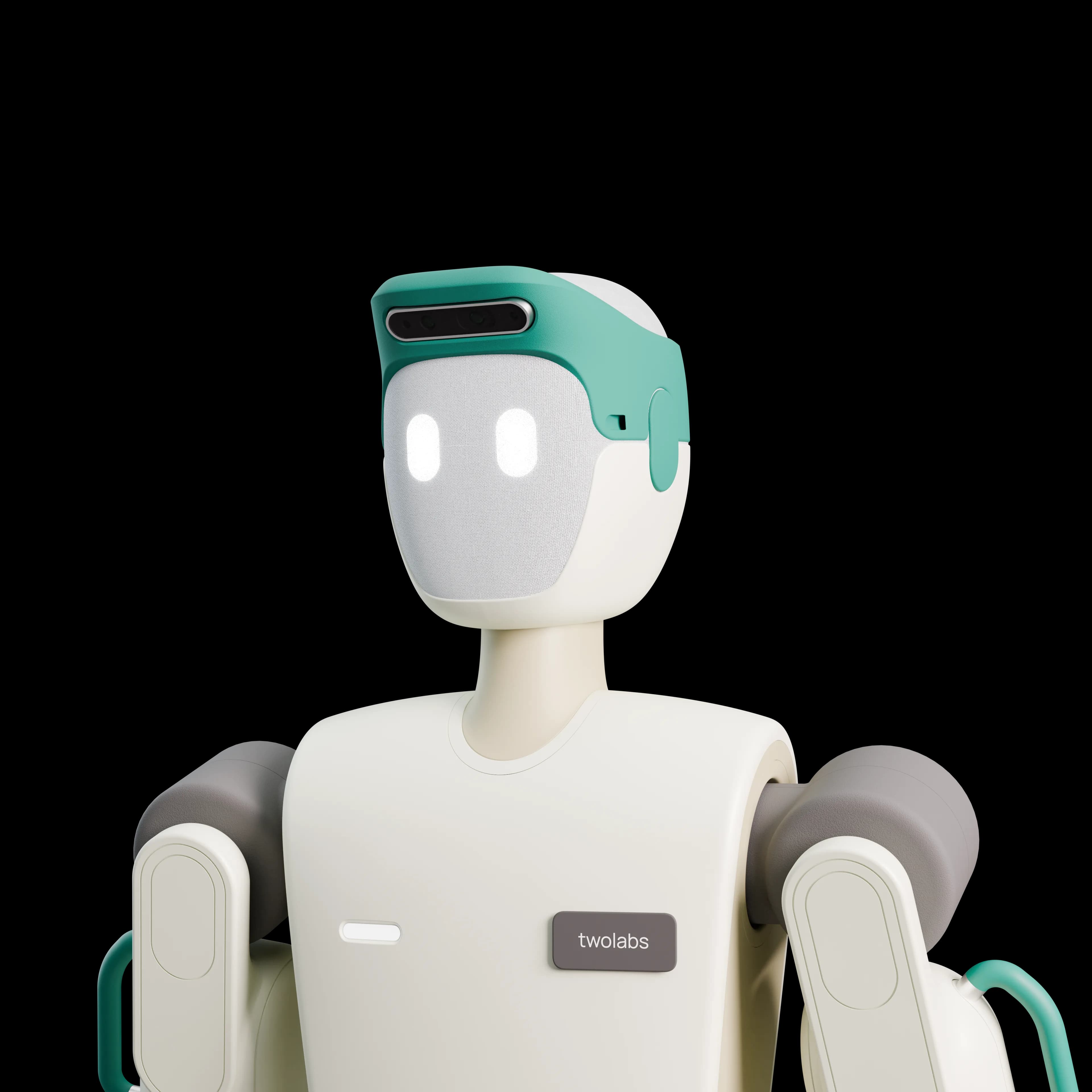
[ 01 ]   The human-robot interaction company

It takes two.

Socially intelligent humanoids, built for caregiving.

Backed by Y Combinator
Decorative terminal showing a walking humanoid mascot.
02Mission

Building socially intelligent humanoids.

We are the human-robot interaction company, building robots that can live and work alongside people. Not just robots that move objects or complete tasks, but robots that interact naturally with the people around them. Robots that understand context, remember people, and adapt to the world they’re in.

It takes two to have an interaction, and we believe great robotics will capture this feeling.

fig.01 // interaction loop[ idle ]
  [ HUMAN ]
      
      │ speaks · gestures
      
  ┌──────────┐    intent     ┌──────────┐
  │  SENSE──────────────▶MODEL   │
  └──────────┘               └──────────┘
                                 
                                 │ plan
      │ observe                   
  ┌──────────┐    action     ┌──────────┐
  │ OBSERVE◀──────────────ACT    │
  └──────────┘               └──────────┘
      
      │ looks · nods · laughs
      
  [ ROBOT ]
hover: SENSE · MODEL · OBSERVE · ACT
03Principles

Great robots are built around human-robot interaction.

For robots to live alongside people, interaction cannot be an afterthought. It has to be fundamental to how they’re designed. The most useful robots won’t just complete tasks. They’ll understand their environment, the people around them, and the situation they’re in.

I Context

Understands the room it’s in.

A robot that knows whether it’s in a kitchen, a clinic, or a living room, and behaves accordingly.

II Memory

Remembers the people it meets.

Names. Preferences. Patterns. The small things that make a helper feel like someone you know.

III Adaptation

Adapts to the world it’s in.

Homes aren’t factories. The robot meets the world as it is, not as a dataset says it should be.

04Where we build

Why caregiving.

Caregiving is one of the most urgent problems in the world today. Nursing homes are short millions of caregivers, families are stretched thin, and the people who need help the most are going without it. It’s also the hardest problem in robotics, because caregiving demands physical capability, emotional presence, trust, adaptability, and patience.

That’s exactly why we’re here. If we can build a robot that a frail 85-year-old actually wants in their home, we can build a robot for anyone. The long-term vision is a world where every household that needs a caregiver has one.

Demand
Live tally of Americans turning 65 today, updating in real time at roughly 11,400 per day.
Americans turned age 65 today
11,400 per day·4.18M this year
Source: Alliance for Lifetime Income, 2025
Supply gap
Live tally of family wages lost to the caregiving crisis today, updating in real time at roughly $16,552 per second.
in family wages lost to the caregiving crisis today
$522B lost annually53M unpaid family caregivers
Source: RAND Corporation / AARP, 2024

Come say hi.